Imagine waking up one morning to find that your wallet is not in your preferred bank anymore. It’s in your phone, and your phone is connected directly to the Reserve Bank of India. Every rupee you spend, save, or send flows not through your bank, but through a government-backed digital ledger.
That’s not a sci-fi scenario.
That’s the future of money, powered by Central Bank Digital Currencies, or CBDCs.
From Paper to Code
Money has always evolved with civilization. From shells to coins, from paper to plastic, and now, from physical to programmable code.
Curious about where it all began? Peek behind the curtain and discover the true history of money in our very first blog post. Check it out here.
A CBDC, like the proposed Digital Rupee (e₹), is essentially the next version of cash, but issued and controlled directly by the central bank. It’s not a cryptocurrency like Bitcoin; it’s sovereign digital money, backed by the same authority that prints physical rupees today.
If Bitcoin was born from the idea of freedom from governments, CBDCs are governments’ way of saying “We can play digital too, and better.”
Why Central Banks Are Racing Toward Digital Currencies
Globally, over 100 countries are experimenting with CBDCs and the reasons go beyond technology.
They are about control, efficiency, and visibility.
Central Bank Digital Currencies (CBDCs) are essentially the state’s high-tech answer to the evolving financial landscape, allowing governments to modernize the economy without surrendering the steering wheel.
By digitizing the rupee (or euro, or dollar), central banks can bypass the massive overhead of printing, transporting, and guarding physical cash, while simultaneously gaining the power to inject or withdraw liquidity with a single keystroke.
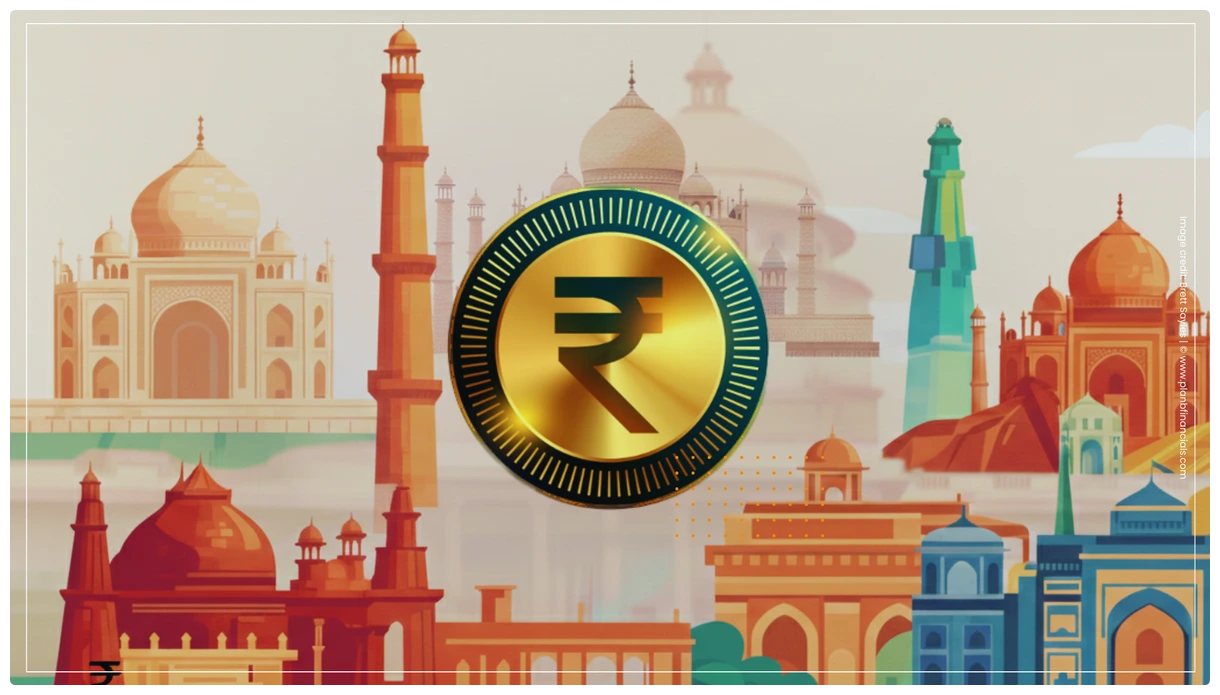
This digital shift does more than just optimize policy; it shines a spotlight on the “shadow economy” by making transactions theoretically traceable, and it bridge-links remote populations to the financial grid faster than any brick-and-mortar bank ever could.
Ultimately, it’s a strategic counter-move against the rise of decentralized crypto while offering the speed and convenience of a digital asset but backed by the traditional authority of the state.
The Digital Rupee Experiment
The Reserve Bank of India launched pilot projects for both retail (individual use) and wholesale (institutional) digital rupees. In the retail pilot, select banks are testing how users can transact seamlessly via QR codes or digital wallets. Well….similar to UPI, but with a crucial difference where CBDC transactions bypass the banking layer.
That means your digital rupee does not sit in your HDFC or SBI account, it sits directly in a wallet linked to the RBI.
Your balance? Central bank money as digital cash.
It’s faster, traceable, and potentially programmable. Imagine conditional payments, expiry dates, or even spending caps. But here’s where it gets interesting and slightly uneasy.
The Promise and the Price
A Digital Rupee sounds efficient, but it also challenges fundamental assumptions about privacy and autonomy. If every unit of money can be traced, every transaction analyzed, and every wallet monitored, then money isn’t just a medium of exchange anymore >> it’s data. And data, as we know, is power.
Digital Rupee/CBDCs could give policymakers unparalleled tools to control inflation or ensure direct benefit transfers. But the same tools could be used to restrict certain purchases, monitor spending behavior, or even enforce compliance in subtle ways.
In other words, financial transparency could easily slide into financial surveillance.
What Happens to Banks and Cash?
If the public can hold money directly with the central bank, where does that leave traditional banks?
They risk losing deposits, which is their primary source of funds, especially if people start preferring risk-free digital rupees over bank balances. To stay relevant, banks may evolve into service providers like managing wallets, offering credit, or enabling digital infrastructure instead of holding deposits.
That’s exactly why we’re seeing an explosion of apps trying to double as banks; these days, it seems like every platform is racing to offer you a micro-loan.
As for cash? It might survive, but as a nostalgic backup, much like landlines in a smartphone world.
The Probable Future
Fast forward a few years, and you can imagine a world where CBDCs replace a large share of cash transactions, tax compliance rises because there is no “under the table” economy, monetary policy becomes more targeted where stimulus could be credited directly to citizens’ wallets and UPI and CBDCs integrate seamlessly, making every transaction instant and traceable.
But alongside these efficiencies will come ethical and philosophical debates about privacy, control, and what financial freedom means when every rupee can be watched.
Because money isn’t just about spending, it’s about choice. And choice thrives best when there is room for trust, not just transparency.
The Big Question
CBDCs like the Digital Rupee may redefine trust in the financial system from trusting banks, to trusting code, and ultimately, to trusting the government’s algorithms. It’s progress, yes, but also a reminder for the smart citizens.
When technology meets governance, innovation often bends toward control.
The Digital Rupee might just prove that the future of money isn’t decentralized, it’s digitally centralized. And the greatest irony?
It might just work flawlessly.
Disclaimer: The views shared here are independent reflections based on observation and experience. This is not investment or financial advice. We do not invest in, endorse, or oppose cryptocurrencies or digital currencies.

Money may go digital, but the real test will be whether your freedom keeps pace with efficiency.
Frequently Asked Questions (FAQs)
1. Is the Digital Rupee the same as UPI or online banking?
No. UPI and online banking transfer money between bank accounts, while the Digital Rupee is a form of central bank digital currency (CBDC) issued directly by the Reserve Bank of India.
2. Is the Digital Rupee a cryptocurrency like Bitcoin?
No. The Digital Rupee is government-backed legal tender issued by the RBI, whereas cryptocurrencies like Bitcoin operate on decentralized networks without central authority control.
3. Can Digital Rupee transactions be tracked?
Digital Rupee transactions are generally more traceable than physical cash transactions, which can improve transparency and reduce illegal activities, while also raising privacy concerns.
4. Will the Digital Rupee replace physical cash?
The Digital Rupee is unlikely to completely replace cash in the near future. Physical currency will likely continue to coexist alongside digital payment systems for convenience and accessibility.
5. How could the Digital Rupee affect banks?
Banks may face reduced deposits if people hold more money in Digital Rupee wallets, but they can still generate revenue through lending, financial services, and digital payment infrastructure.
Disclaimer: All content published on PlanB Financials is strictly for educational, informational, and research purposes only. The views expressed here do not constitute professional financial, investment, legal, or tax advice. We are not SEBI-registered investment advisors or research analysts. Any financial metrics, screenings, or strategies discussed are based on historical data and should not be treated as a guarantee of future performance. Investing in financial markets involves risks. Readers are urged to conduct their own independent due diligence and consult a qualified, SEBI-registered professional before making any financial or investment decisions.